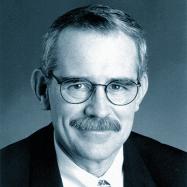
Brad Zigler

REP's Alternative Investment Editor

As part of the "Alternative Investments e-Letter", subscribers will have an opportunity to ask Brad Zigler questions. A subscription is required to view this content. Click here to find out how to subscribe.

  • Alternative Investments

    A

    For this question, we turned to Brandon Riker, Director, Strategic Marketing and Analysis at Teucrium Trading LLC. Teucrium is an issuer of a half dozen single-commodity agricultural and energy exchange-traded funds. 

    Contango, simply stated, exists when the price of a commodity is higher in the future than in the spot [immediate delivery] month; backwardation is the opposite condition, that is, the commodity price is lower for future delivery than the spot month cost.

    You can think about contango as the carrying cost from one month to another. Some commodities have a lower "cost to carry" the underlying good than others. One component of this carrying charge is the cost of storage. Futures contracts must be replaced, or rolled, before the delivery of the good required by the contract, otherwise the holder must actually take delivery of and arrange for storage of the commodity. Storage costs vary dramatically according to the type of commodity, so prices along the futures curve tend to reflect the impacts of these costs over time.

    For example, the storage costs associated with gold are relatively insignificant, compared to many other commodities, because a bar of gold is easier to store than a barrel of oil or a bushel of corn. A bar of gold takes up very little space and does not need to be in a climate controlled environment; more importantly, gold is non-perishable with little or no ongoing transportation costs. For all these reasons, the futures curve on gold is impacted less by the economics of contango and backwardation than many other commodities.

    Conversely, oil requires a relatively expensive and complex closed system of transportation and storage, and the price of this is often reflected dramatically along the futures curve. These costs can have a significant impact on the value of commodity-holding ETFs over time. In oil futures, for example, there are twelve contract months per year. If a fund only held futures in the front (spot) month, its managers would need to roll each month, resulting in a 1,200% annual portfolio turnover.

    That creates a potentially large exposure to contango. [Editor’s Note: Rolling a long position forward in a contango entails selling the expiring (lower-priced) contract and buying the distant (higher-priced) futures; in essence, “selling low and buying high.” The methodology underlying some commodity ETFs mitigate the effect of contango by calling for the purchase of those distant contracts with smallest premiums to spot (less contango) or with biggest discounts to spot (more backwardation). Investors need to know how an ETF deals with contango and backwardation before committing their capital. Funds vary in their approach].

  • Alternative Investments

    A

    John Hyland, Chief Investment Officer of United States Commodity Funds LLC, steps in to field the next question. His outfit sponsors a dozen exchange-traded products, mostly single-commodity funds covering the energy sector.

    Investments in commodity futures ETFs or funds are subject to a different tax treatment compared to stock or bond funds. Sometimes this may work in favor of an investor, sometimes not. One fundamental dissimilarity is that, at the end of each year, investors are taxed on the commodity fund's capital gains as if they had sold their shares (of course when they do sell there shares, they won’t pay taxes a second time on these gains).

    That said, investors can also claim a capital loss in the current year without selling shares. Claiming capital gains or loses each year is known as "mark-to-market" accounting and it primarily impacts when one pays taxes and not so much how much one pays.

    Additionally, as with any mutual fund, investors are taxed on any interest or ordinary income the fund earns during the year. They can also take as a deduction their share of the fund's expenses.

    Funds organized as commodity pools issue K-1 tax forms rather than the 1099s produced by mutual funds. Starting in February each year, funds begin sending out K-1 forms. Owners of a commodity ETF will note that almost all of the boxes of the K-1 are blank, except for the four detailing their share of the fund’s long-term capital gain (or loss), short-term capital gain (or loss), income and expenses. As a result, the K-1 is not much more complicated than the 1099 sent by a mutual fund (by comparison, a K-1 from a real estate partnership will be very complicated).

    One other notable difference between stock owning funds and futures funds is that with the commodity futures, all capital gains or losses are assumed to be 60% long term and 40% short-term, even if the fund held the futures positions for just a short time. An equity fund only claims as a long-term gain stocks held and sold after one year. All other trades get short-term treatment.

    The "60-40" treatment might be better for investors or it might be worse. It really can’t be predicted, but largely depends on one’s tax bracket [Editor’s Note: For example, taxpayers at the highest marginal tax bracket -- 39.6% -- would face a nominal 24.8% tax liability on their year-end mark-to-market gains].

Latest poll

Absolute Perfection

This flawless, 101.7-carat, pear-shaped diamond—one of the world’s largest —will go up for auction at Christie’s “Magnificent Jewels” sale in Geneva on May 15, 2013. How much will it sell for? Choose the correct answer and registered site users will be eligible to win a one-year subscription to Christie's Geneva Jewelry sales catalogue, courtesy of Christie's. 

Image courtesy of  Christie’s Images Ltd. 2013

Latest Forums Topics

http://wealthmanagement.com/site-files/wealthmanagement.com/files/uploads/2013/02/forums-graphic.jpg

"Do firms check U5's when hiring?"

Read More

More Topics

Need sales based app for daily Management

Sales called backbone for business. I am sales person in one MNC so i need app to manage my tasks, work details please share with me if you have any app for sales. My friend Linda suggest me about top ipad Sales Assailant App ( Coming soon ) and other another apps. If you have any suggestion please share with me ..     thanks steve...More
Retirement Planning Snapshot

The Numbers Behind Social Security

Most Recent Blogs & Columns
May 22, 2013
blog

Outgrowing Wall Street?

Are advisors outgrowing Wall Street? A new Cerulli report on the rise of the “boutique” seems to suggest that many are....More

Browse Blogs Browse Columns
Market Data

Market index values delayed 15 min

Newsletter Signup